

It is swim season and swim teams are working hard on their skills. I love to swim and enjoy swimming in the mornings. As I was swimming, I realized that it is a great example of the Transformation Triangle. As I mainly swim backstroke, I like to swim in the lane that is marked out with lane ropes to keep me straight. If the swim lane for lap swimming is already in use, I can’t swim as fast, I have to keep a lookout for other swimmers and often go astray as I deviate from the lane I would otherwise be in.
Leaders in businesses often invest a lot of time and money in strategic planning, technology, innovation and look for different ways to motivate or bring about more effective teams and cohesiveness. Yet despite these great desires, many transformation efforts can go by the wayside and lose momentum. They fail to produce the meaningful results and intensions they initially planned. It is so easy to fall back into old or known behaviors, especially when we are busy or caught up in deadlines. With all the motivation and enthusiasm, ‘stuff’ gets in the way unless we have someone to keep us on track.
A Swim team has a coach, usually at the side of the pool, encouraging the swimmers and tracking their speed, teaching them stroke methods, breaking down complex techniques and evaluating their progress. They work specifically on breath control, turns, dives and anything else that will give the swimmer the ability to win. A swim coach will determine which events swimmers will compete in. They run pre-race warmups and cultivate a positive environment, responsibility and discipline.
As a business grows and develops there will often be transformation and evolvement. A great leader has to face these interesting challenges most days.
Creating a practical process
The Transformation Triangle will help because it looks to align the vision, leadership and implementation all together when everything feels equally important. It breaks down how the process works. Often there are many theories that exclude implementation. The Transformation Triangle becomes a powerful framework turning overwhelm to enthusiasm creating direction and improving performance. It drives meaningful sustainable results. As we look at the leadership and direction of a swim team there are several key similarities.
Turn overwhelm to enthusiasm
Rather than viewing transformation as a series of projects, the Transformation Triangle gives a practical structure that helps to align goals with action, which then inspires people who are excited by the changes. We also measure the progress along the way. I know that I enjoy and stay engaged when I measure results. I know where I am and the progress either made or not reached yet. Whether they are positive or negative measurable results, I find myself motivated one way or another. Either it gives me more determination to succeed, or I can feel proud of the results so far. If I can learn from someone else how to make it easier and quicker and get either the same or better results I am motivated.
Measure the progress
The Transformation Triangle
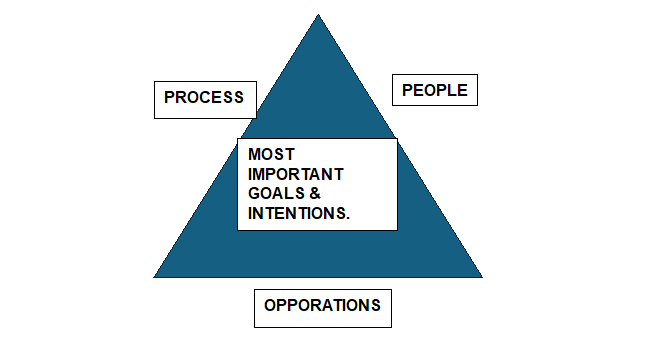
We can all have great ideas, but how many ideas actually get put into action?
Practical Business Example
4 Simple Steps for A New Business Starting as An Idea
- Someone has an idea of starting a business, they have a great idea and start to talk about what they intend to do. (Goals & Intensions)
- They are excited about their ideas and start to engage others into what they intend to do. They invite others that they trust and feel excited about on how to participate, join in, be cheer leaders and help in spreading the word.(people).
Make sure that the right people are in place.
- Together those who are engaged create a path for the product or service so that people know it exists and can buy it, become a customer, join in, or at least know it exists so they can let others know about it. They develop a marketing plan and a sales plan, maybe even a business plan along with a system for letting others know what is happening. (process)
- They then find they need Apps, software, vendors and have expenses. They also find that as they develop that; leadership skills, measurables, project managers and other systems may need to be in place. (operations)
Changes that will help achieve the goals
The Transformation Triangle connects 3 essential components that successful organizations consistently demonstrate. It breaks down the process, whether naturally by default or because they understood the Transformation Triangle from the beginning.
- Clear strategic direction
- Leadership that inspires action
- Structured execution with measurable outcomes
Swimming example
- Clear strategic direction – win the race
- Leadership that inspires action- show them techniques and encouragement
- Structured execution with measurable outcomes. Stay in the swimming lane, the coach decides which race to enter because of performance.
Like the 3-legged stool, if one side is weaker, then the transformation will be unstable and won’t work effectively, or it will take longer to make it stable as adjustments occur.
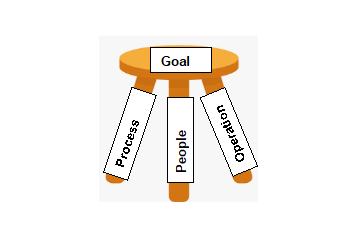
When all 3 sides are strong the business develops momentum and is scalable as well as sustainable. It creates clarity, establishes boundaries and keeps everyone focused on what really matters to get ahead and stay on track.
Some transformation will focus on a specific issue, while others need a deeper move for the whole business and how it operates. Sometimes it is a project with a specific transformation and a definite problem to solve. It could be something more process driven like workflows and involve multiple teams to create the overall results and performance enhancements needed. It helps to build resilience to minimize disruption as the restructure occurs.
Make it achievable and believable
This process is a structured approach and the Transformation Triangle makes everything achievable by creating a framework and establishing a direction of focus by prioritizing the tasks that must occur to be successful. It can provide a clear structure that encourages buy-in and establishes boundaries for change.
Communicate to stay engaged
To keep everyone engaged it is important to keep sharing the vision of what is possible while sharing the goals and intensions. Strong leaders do far more than communicate strategy. They inspire confidence and help people to see the purpose behind the change. Be sure to research the S.W.O.T (strengths, weaknesses, opportunities and threats) along the way. Leadership is the driving force behind the successful change. Communicate the wins and team efforts. Inspire confidence and build trust. Ask those involved what would make this even better to develop buy-in and enthusiasm. This is how the processes evolve. Link the shifts to the goals so that change will naturally take place and acknowledge those who have helped to make it happen.
Prioritize
When the priorities are recognized, the energy is channeled in the right direction. Keep the priorities top of mind. If you wish to use the Priority Ladder to prioritize competing demands , it is available to upload complimentary.
Get Your Free Priority Ladder Template
Every successful transformation begins with clarity. Many businesses have ambitious goals, but fewer have their goals broken down into consistent and manageable daily actions. The Transformation Triangle bridges this gap with objectives and practical execution.
When goals and actions are aligned, priorities become clearer, decisions become easier, and teams move together with greater confidence. Transformation doesn’t happen because of a document, it happens because people believe in the direction. The actions taken so far have achieved the results attained. What needs to change to get to where you want to be? What will be done differently from now on?